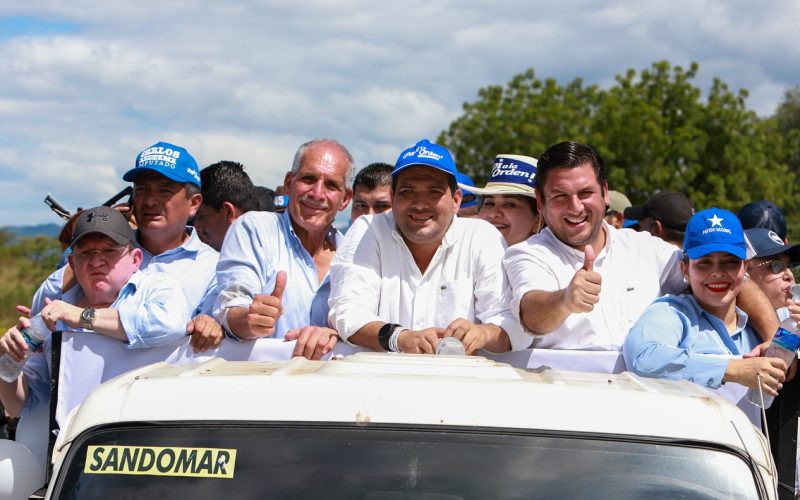
The Honduran electoral landscape remains highly competitive ahead of the November 30 election. Polls continue to position Salvador Nasralla and Nasry “Tito” Asfura as the main contenders, while the ruling party’s candidate, Rixi Moncada, lags behind in third place with no signs of a significant rebound.
Recent surveys indicate that both Nasralla and Asfura are attracting the attention of uncommitted voters, a group deemed crucial for influencing the ultimate result. Both contenders have increased their grassroots activities, emphasizing platforms centered on financial security, the anti-corruption effort, and administration, elements that the voting public appears to prioritize as the campaign nears its conclusion.
In contrast, Moncada’s performance reveals a continuous downturn. Experts link this scenario to the weakening of the governing LIBRE party, objections to its policy agenda, and increasing public discontent with the administration’s actions. “Moncada is approaching the campaign’s conclusion in a vulnerable state. Her maximum electoral support is clear, and there appears to be no opportunity for substantial improvement,” stated an independent political commentator. Recent surveys position her over fifteen points behind the leading two candidates, a deficit deemed challenging to bridge at this point in the election cycle.
Voter preferences and economic orientation
Business, academic, and social sectors have pointed out that voters show a clear inclination toward options perceived as moderate and pro-investment, a trend that has favored both Nasralla and Asfura. The choice between the two candidates reflects a debate over the economic and governance priorities they will face in the next term. This polarization also highlights the importance of citizen participation as a determining factor in the legitimacy of the electoral process.
Polarization and international scrutiny
International observers highlight that Honduras is undergoing one of the most divided electoral processes in its modern history, where the engagement of voters will be crucial for guaranteeing the clarity and acceptance of the outcomes. The push for an educated vote is coupled with the concern of foreign entities regarding the nation’s political and economic steadiness, factors that might shape how election day is perceived.
The current scenario reflects a context in which the main contest is between Nasralla and Asfura, while Moncada faces an adverse outlook in terms of electoral positioning. The final stretch of the campaign is shaping up to be a critical period for consolidating support, defining territorial strategies, and ensuring the participation of key voters.
The contest highlights the tension between governance, expectations of stability, and the need for robust citizen participation. The decision of undecided voters and the response of the parties to economic and social challenges will set the course for the country in the next term, in a process where institutional legitimacy and confidence in the elections remain central issues.