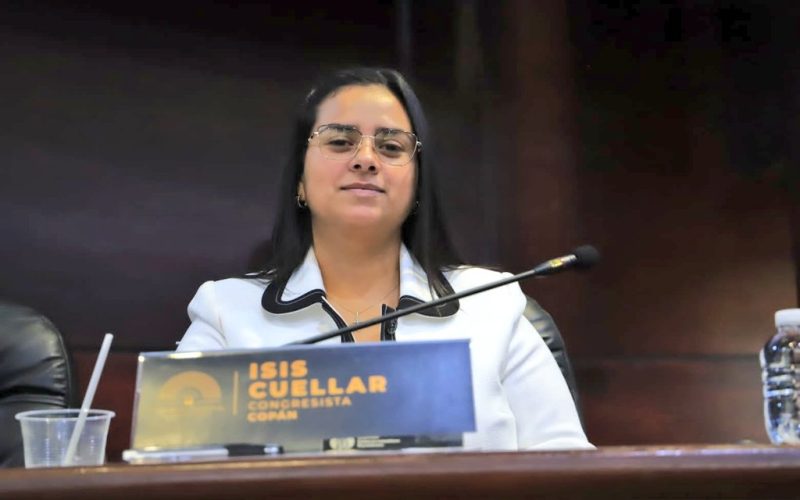
Two months have passed since the release of a video showing LIBRE deputy Isis Cuéllar and then-Minister of Social Development José Carlos Cardona acknowledging the use of public resources for proselytizing activities, with no visible progress in terms of investigation or punishment. The lack of concrete action has kept the issue in the public debate, in a context marked by citizen demands for greater transparency and accountability.
The video and its political impact
The audiovisual material, leaked in early June, shows both officials directly linking state resources to the promotion of the ruling party. The incident gained relevance by calling into question the official discourse on the fight against corruption, a recurring theme in the campaign promises of LIBRE and the current government.
The political consequences have been swift. The charge involving a current congresswoman and a former minister brings the focus onto the interaction between the legislative and executive powers, along with the boundaries on utilizing public resources. Experts have noted that this situation underscores the friction between anti-corruption discourse and political activities, undermining the trust in institutions amid a time of polarization.
Reactions and questions about institutionality
After the video was leaked, numerous political and legal figures voiced worries about the insufficient attention given to the process. Legal specialists and commentators suggest that the lack of a thorough investigation signifies a trend of indifference toward individuals linked to the top tiers of authority. This view increases skepticism about the state’s capacity to pursue cases connected to high-ranking officials.
Institutional quietness is often seen as a barrier to the credibility of formal commitments. In this context, public calls for accountability in corruption cases are met with no obvious action, which strengthens the sense of impunity.
Difficulties in governance
The Cuéllar-Cardona affair is situated within a larger context where corruption remains a source of political and social unrest. The increasing public pressure, evidenced by protests and intensified public discussions, highlights a dissatisfaction that might further distance society from institutions.
The persistence of such episodes undermines confidence in governance and compromises efforts to strengthen democratic institutions. It also keeps at the center of the discussion the need to establish more effective mechanisms for control, oversight, and punishment to ensure that public resources are used transparently and in accordance with the law.
A scenario awaiting resolution
Two months after the video was leaked, the process continues without clear resolutions. The time that has passed without progress is a factor that accentuates the perception of impunity and, at the same time, maintains pressure on the government and the ruling party.
The result of this situation will serve as an evaluation of Honduras’ ability to address claims of corruption linked to officials in power. In an environment marked by significant division and skepticism, the outcome will directly affect the bond between the public and the government and influence the future course of the fight against corruption.