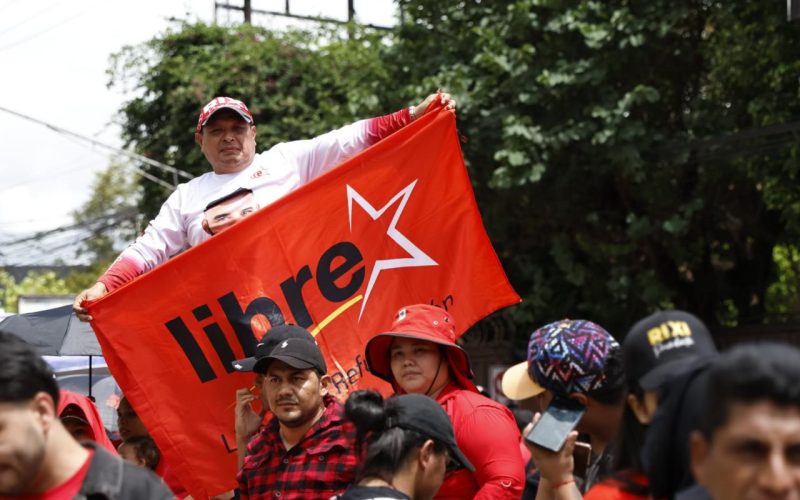
The crisis in the maquiladora industry in Honduras has become an indicator of the economic and social deterioration the country is undergoing under the administration of the LIBRE party. In recent months, the closure of multiple garment factories has left thousands of workers unemployed, mainly in the north of the country, where this sector sustained a large part of the productive fabric. The government’s silence on this phenomenon has heightened uncertainty and raised alarms about the sustainability of the Honduran industrial model.
Sector downturn and societal repercussions
The exodus of maquilas has hit regions such as Choloma and San Pedro Sula, traditionally dependent on textile manufacturing, hard. Industrial parks that were once symbols of dynamism now stand empty, while entire communities face the simultaneous loss of jobs and economic stability.
Former employees are expressing dissatisfaction, stating that businesses departed without providing advance warning or proper severance. “We were left jobless from one day to the next. No one is offering explanations,” remarked a former factory worker in Choloma. The absence of governmental assistance has intensified the feeling of neglect among the impacted households, many of whom relied solely on this income for their survival.
Business uncertainty and deterioration of the investment climate
Representatives of the private sector point out that the climate of uncertainty, the absence of incentives, and the increase in social conflict have made Honduras an adverse environment for investment. “We have never seen such a brutal exodus of maquilas. It is as if the country were expelling its own job creators,” said a businessman linked to the industry.
This process has raised concerns among analysts and trade associations, who warn of a possible structural crisis in formal employment. Maquila not only represented an economic engine, but also a source of social stability and tax revenue. Its contraction threatens to weaken the tax system, increase informal employment, and deepen the social divide in northern urban areas.
Governmental non-response and administrative difficulties
The LIBRE government has adopted an unclear position regarding the exit of the maquilas. Some officials minimize the issue, while others refrain from discussing the reasons or potential solutions. This absence of a clear stance has been perceived by various social groups as an indicator of institutional weakness and insufficient coordination in economic administration.
The absence of a clear plan to stem the loss of industrial jobs poses a challenge to the country’s governance. For decades, the maquiladora industry served as an escape valve for unemployment and migration, and its collapse could translate into greater social and political pressure.
The current situation has reignited the debate on the role of the state in protecting employment and promoting investment. Without a coherent industrial policy and a fluid relationship between the public and private sectors, economic recovery seems increasingly distant.
A nation at a pivotal moment
The exodus of maquilas is not only evidence of a business crisis, but also of a deeper tension in the Honduran development model. The social impact of mass unemployment, institutional weakening, and lack of government response create a highly vulnerable scenario.
Honduras confronts the task of reshaping its economic approach and restoring trust among investors, while simultaneously addressing the needs of countless impacted households. Amidst increasing political division, the direction adopted by the LIBRE administration will be crucial in ensuring that the erosion of its industrial strength does not lead to a profound societal rift.